U.S.-Israeli Relations: A struggle between values and interests
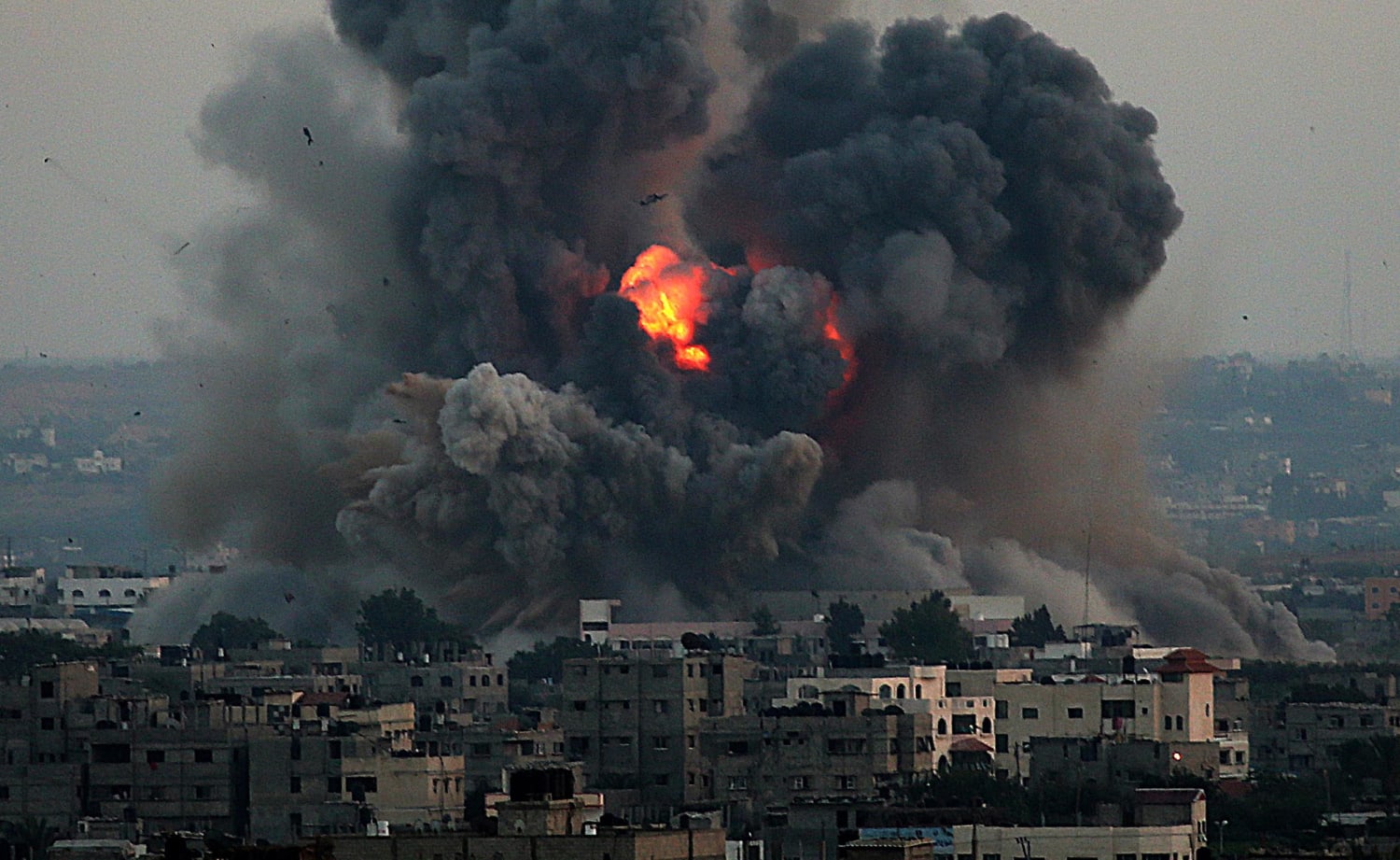
(Image Credit: NBC News)
In keeping with the case study on Somali Piracy, I decided
to identify another meaningful study for evaluating the role of values and
interests in determining state behavior. One important international event that
has been very contentious for the international community is the Israeli military
operations against Gaza and the Palestinians to prevent rocket incursions. The
United Nations report reviewing operations from June to August 2014 concluded
that: “a “staggering” three-fourths (1,479) of a total of 2,158 Palestinian
fatalities were civilians, of them over one-third (506) were children.”[1]

Within this context, the United States was forced to choose
between supporting and condemning a key U.S. ally in a contentious and volatile
region. U.S. policy can be analyzed as a reflection of our perceived national
values or as a calculation of interests in the region. Laffey and Weldes
contend that values provide a lens or framework which shapes a state’s perception
of its national interests.[2]
A values based analysis of U.S. policy should contend that
the American commitment to human rights should dictate a strong diplomatic
response to Israeli excesses. This approach would expect the U.S. to respond by
bringing a resolution against Israel for using excessive force, similar to how
the U.S. has addressed human rights violations in Bosnia or Sudan.
An interests based approach to U.S. policy decisions would
contend that Israel is a key ally in the region, and responsible for keeping
the peace and preventing an upsurge in terrorism. Israel requires assistance
from the western world in combatting the threat posed by Islamic terrorists.
As we would expect, the U.S. chose to balance its values of
human rights with what it perceives as key strategic interests in the region. The
United States took a position somewhere in the middle between interests and
values. In July, President Obama made a speech “"Israel has a right to
defend itself against rocket and tunnel attacks from Hamas. Israel has already
done significant damage to Hamas's terrorist infrastructure in Gaza... We have
serious concerns about the rising number of Palestinian civilian deaths and the
loss of Israeli lives. That is why it now has to be our focus and the focus of
the international community to bring about a ceasefire that ends the fighting
and can stop the deaths of innocent civilians, both in Gaza and in
Israel."[3]
This case study illustrates how values and interests can be
applied to evaluate policy decisions, providing insight into how a country
defines and acts on its perceived interests.
[1] “Accountability
for Israeli, Palestinian rights violations vital for peace – UN official,” The
United Nations News Service, 22 September 2014 (Accessed online 27 January
2015) http://www.un.org/apps/news/story.asp?NewsID=48778#.VMhS_GjF-So
[2] Laffey,
Mark, and Jutta Weldes. "Beyond belief: ideas and symbolic technologies in
the study of international relations." European Journal of International
Relations 3.2 (1997): 193-237.
[3] Ren
Zhongxi, “Obama reiterates support for Israel,” Xinhua, 22 July 2014 (Accessed
online 27 January 2015, http://english.cntv.cn/2014/07/22/ARTI1405987378520399.shtml)

Ben ~ I like how you explore both the ideas-based and interest-based options as possible motives for guiding action. I would add to the interest-based consideration the strength of pro-Israel lobbies in American domestic politics: Obama speaking out too strongly against Israeli actions could damage domestic as well as international interests.
ReplyDeleteObama's response falls far short of a "diplomatic response" - I think you are right that he is aiming for a balance: He cannot condone the high civilian casualties, nor can he condemn Israeli actions, so he does a fair job of discouraging the former while avoiding the latter.