The Intersection of Beliefs and Interests on the International Stage
As we progress from the theories of liberalism and realism
to evaluate the actions and behaviors of states, we can retain the inherited
model of Rational Self-Interest as the guiding force for
states when interacting on the international realm. Modern international
relations theorists have sought to explain state behavior by adapting rational self-interest
to encompass both ideas and interests.[1]
A simple example of where worldviews impacted a state’s
decisions in the international realm is Chinese views of sovereignty and its
effects on their diplomatic efforts at the United Nations. China is involved in
a protracted sovereignty dispute over the territory of Taiwan, which maintains
its own government and diplomatic relations.[2] Judith
Goldstein and Robert Keohane argue that there are three types of ideas or
beliefs which impact foreign policy: world views, principled beliefs, and
causal beliefs.[3] China
has the principled belief that state sovereignty is inviolate. This belief has
grown to impact many Chinese actions before the UN Security Council, especially
as it relates to Taiwan. China vetoed peacekeeping operations in Guatemala in
1997 and Macedonia in 1999, in response to those countries establishing
diplomatic relations with Taiwan.[4] In
1999, as the conflict in Kosovo worsened, the western powers called for
military action to restore peace. David Bosco writes that “Russian and China
were willing to condemn Serb excesses through tough council resolutions, but
they refused to explicitly authorize the use of force. Both countries saw the
Western push as a dangerous violation of Serbia's sovereignty.”[5]
All three of these examples demonstrate that China was willing to accept some
instability and conflict in order to maintain its principled belief that state
sovereignty is sacred.
The actions of states when there appears to be a conflict
between ideas and interests is an especially important topic of study. The Chinese
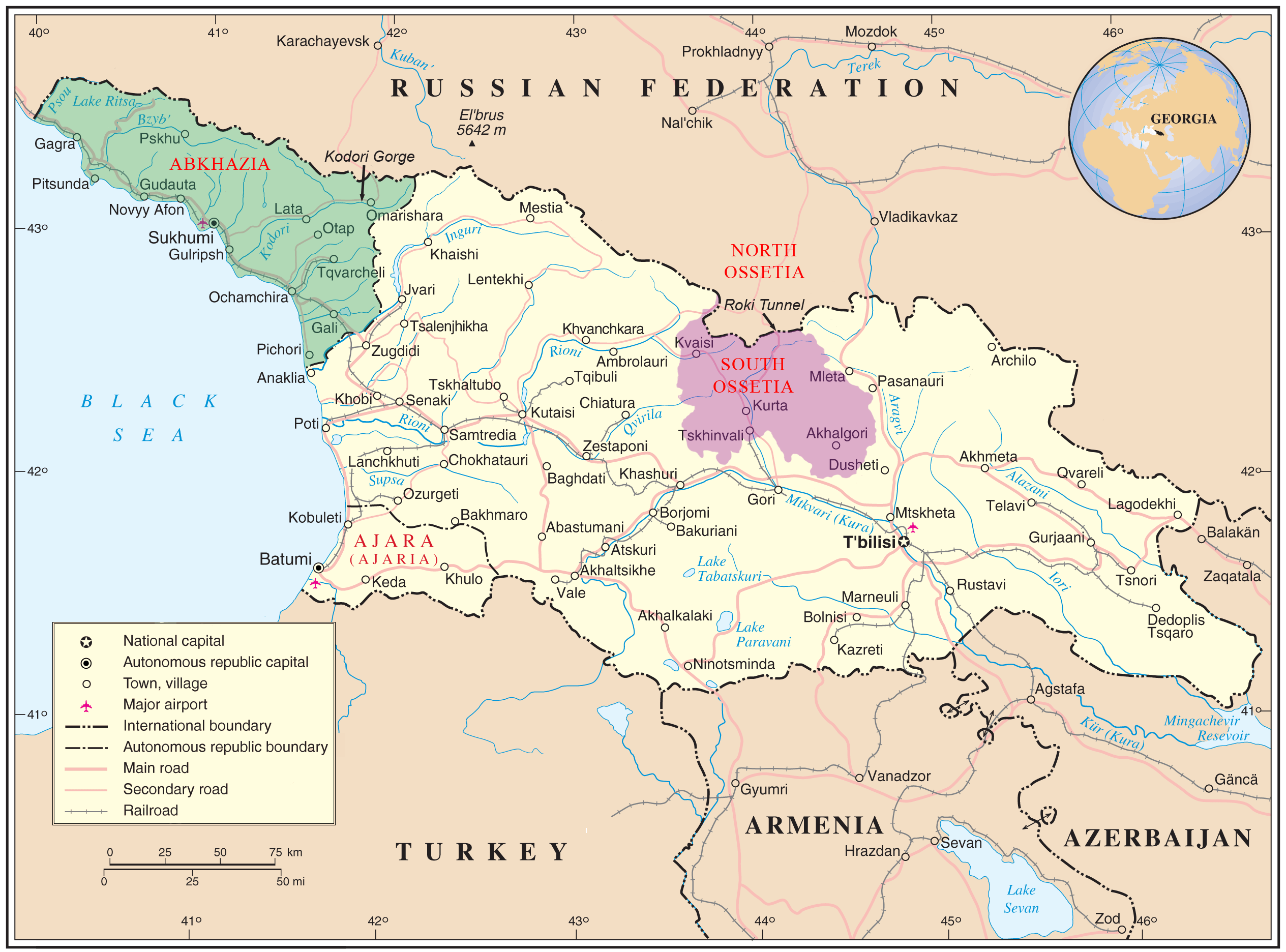
emphasis on the principle of state sovereignty was tested when Russia invaded
Georgia in August 2008.[6]
Russia sought to empower separatists in South Ossetia and Abkhazia, effectively
annexing territory from Georgia and upending their plan to join NATO, creating
a buffer zone between Russia and Eastern Europe.
 |
| Image Credit: Wikipedia |
 |
| Image Source: Wall Street Journal |
China is increasingly finding it hard to tiptoe the line between supporting sovereignty and condemning their key partner at the UN Security Council. The Diplomat concluded that “China, meanwhile, is trying to tread a fine line on the issue. When asked at a press conference if China would recognize Crimea as part of Russia, Foreign Ministry Spokesperson Hong Lei gave a carefully noncommittal response: “China always respects all countries’ sovereignty, independence and territorial integrity. The Crimean issue should be resolved politically under a framework of law and order. All parties should exercise restraint and refrain from raising the tension.”[8]
[1] Goldstein, Judith, and Robert O. Keohane. "Ideas and foreign policy: an analytical framework." Ideas and foreign policy: Beliefs, institutions, and political change (1993): 5
[2] http://en.wikipedia.org/wiki/Political_status_of_Taiwan
[3] Goldstein, Judith, and Robert O. Keohane. "Ideas and foreign policy: an analytical framework." Ideas and foreign policy: Beliefs, institutions, and political change (1993):10
[4] Bosco, David L. Five to rule them all: the UN Security Council and the making of the modern world. Oxford University Press, 2009. 208
[5] Ibid., 209
[6] http://en.wikipedia.org/wiki/Russo-Georgian_War
[7] Chris Buckley, “China invokes Olympics in urging South
Ossetia ceasefire” Reuters, August 8, 2008 (Accessed online January 18, 2015: http://www.reuters.com/article/2008/08/09/us-georgia-ossetia-china-idUSPEK20856020080809)
[8] Shannon Tiezzi, “China Reacts to the Crimea Referendum,” The Diplomat, 18 March 2014 (Accessed online January 18, 2015: http://thediplomat.com/2014/03/china-reacts-to-the-crimea-referendum/
[8] Shannon Tiezzi, “China Reacts to the Crimea Referendum,” The Diplomat, 18 March 2014 (Accessed online January 18, 2015: http://thediplomat.com/2014/03/china-reacts-to-the-crimea-referendum/

This is a good analysis but one that stands within the 'interests paradigm'. I think you are right to be skeptical of a lot of the 'ideas as interests' literature, but the ideas paradigm itself wouldn't see such a contradiction. In fact, it would see a change from 'China is trying to become a world power' to 'China is a world power with real geopolitical interests'. Thus China is acting in a way that fulfills the latter role.
ReplyDeleteBen ~ You are right to identify this conflict between China's various interests: in this case, its interest in upholding the principle of national sovereignty as regards itself and Taiwan, and its conflicting interest in maintaining Russian support for Taiwanese-Chinese reunification even while Russia does not seem to consider the principle of national sovereignty important. I would add that this kind of compromise happens all the time on both the national and international level: states must prioritize certain interests over others. It is interesting, nonetheless, to observe what priorities states choose and the circumstances in which they choose them.
ReplyDelete