“Private actors
are increasingly engaged in authoritative decision-making that was previously
the prerogative of states.”[1]
-
Ferdinand
Braudel
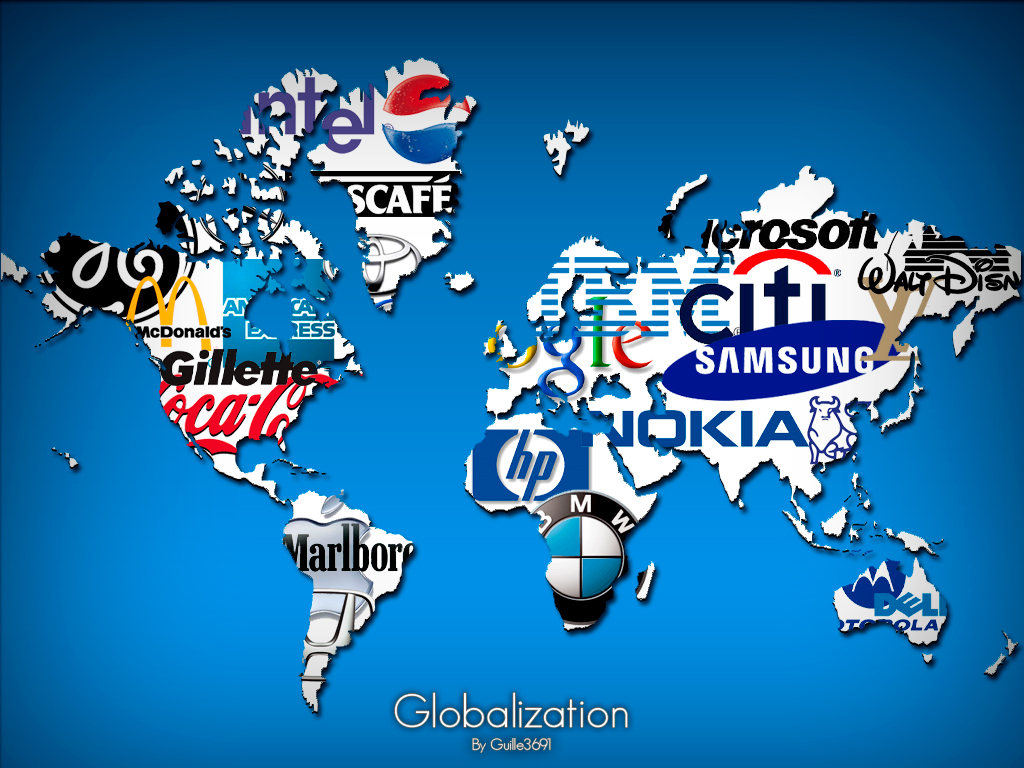
One of the most
obvious issues raised by the transition from autonomous sovereign states to an integrated
world is the need for global governance structures to handle transnational
economic issues. Nayef Al-Rodhan and Gérard Stoudmann explain that globalization
“encompasses the causes, course, and consequences of transnational and
transcultural integration of human and non-human activities.”[2]
Activities which transcend preexisting sovereign boundaries require new
approaches to authority.
The World Trade
Organization is now the predominant actor overseeing international trade. Amnesty
International lacks the same authority as the WTO, but is still a definitive
voice on human rights, and Greenpeace plays a strong role in holding
corporations responsible for environmental damage.[3]
Each of these private authorities helps prevent negative externalities caused by
global economic integration.
While some have
decried the lack of coercive power held by private authorities, there is little
doubt they contribute to holding multinational economic actors responsible for
actions. In response to pressure from Amnesty International and numerous other international
organizations, the United States Security and Exchange commission has
implemented the “Conflict Minerals Rule,” forcing companies to disclose their
use of conflict minerals in the manufacture of products.[4]
The World Trade Organization has also provided a mechanism for states to hold
each other and multinational corporations accountable for environmental harm.
In the absence
of formal economic global governance institutions under the auspices of the
United Nations, the private authority exercised by international actors and
non-governmental organizations provides an important check on the negative
externalities created by multinational economic activity.
[1] Braudel,
Fernand. Afterthoughts on Material
Civilization and Capitalism, The Johns Hopkins Symposia in Comparative
History. Baltimore, Johns Hopkins University Press, 1977., p. 20
[2] Al-Rodhan, Nayef
RF, and Gérard Stoudmann. "Definitions of globalization: A comprehensive
overview and a proposed definition." Program
on the Geopolitical Implications of Globalization and Transnational Security
6 (2006), p. 1
[3] Kobrin,
Stephen J. "Economic governance in an electronically networked global
economy." Cambridge Studies in
International Relations 85 (2002): 43-75. 67
[4] “Disclosing
the Use of Conflict Minerals,” U.S.
Securities and Exchange Commission, July 29th, 2014 (Accessed
online 14 March 2015, http://www.sec.gov/News/Article/Detail/Article/1365171562058#.VQRmU454rYg)

Hi Ben - very interesting post on the check NGOs and other international actors provide on negative externalities in the global market. I would be interested to find out if there is research that attempts to measure the success (or extent of influence) of bodies like the WTO, Amnesty, US Security & Exchange commission etc. at restraining the actions of multinational corporations and other major self-interested global economic actors.
ReplyDelete